
Ba Vi National Park, Hanoi – Style Motorbikes Vietnam
Ba Vi National Park
Ba Vi National Park sits about 60km west of Hanoi, making it one of the easiest mountain escapes from the city by motorbike. The park covers the Ba Vi mountain range, rising to just over 1,200m, with dense cloud forest, French colonial ruins, a mountain temple dedicated to Ho Chi Minh, natural swimming spots and quiet winding roads through the trees. It works well as a day trip from Hanoi or as a first or last night stop on a longer route heading west towards Mai Chau or beyond.

Getting to Ba Vi National Park by Motorbike
Ba Vi is 60km from central Hanoi and takes around 1.5 to 2 hours depending on your starting point and route. There are two main ways to approach the park.
The faster route follows Highway 32 directly west out of Hanoi through Son Tay. It is straightforward to navigate and gets you to the park entrance efficiently, but the road carries a fair amount of traffic through the built-up sections.
The recommended route, and the one marked on the Style Motorbikes route map, follows the Red River road west from Hanoi before joining the Da River south through the Ba Vi district. This is a significantly quieter road with very little traffic and good scenery along the river. It takes slightly longer but is a much more enjoyable ride, particularly in the morning when the light on the water is at its best. This is the route worth taking if you have the time.
The road into the park from the Ba Vi district side is well surfaced and signposted. The main park entrance gate is located at the base of the mountain on the Tan Linh side.
Ba Vi also makes a natural connection point on a larger northern loop from Hanoi. Heading west from Ba Vi, Mai Chau is around 80km away, making it a comfortable half-day ride after exploring the park in the morning. It is also about a 4 hour motorbike ride to either Nghia Lo or Ta Xua meaning a night in Ba Vi shortens these rides.
This makes Ba Vi a sensible first stop for riders beginning a longer northern loop rather than heading directly out of the city on the highway.
Park Entrance and Fees
The main entrance gate is located at the foot of the mountain. Entry costs 60,000 VND per person for foreign visitors, with a small additional parking fee for motorbikes of around 5,000 – 10,000 VND. The road through the park up to the summit area is included in the entrance fee.
The park is open daily. There is a map board at the entrance — worth taking a photo of it as printed maps are not freely available inside.
Which Bike for Ba Vi
The road from the entrance gate up to the summit area climbs steadily over about 10km with some tight bends and steeper sections near the top. It is well-paved throughout, but the gradient and the corners mean it rewards a bike with reasonable power and manual gears.
Any manual or semi-automatic bike in the Style Motorbikes fleet handles the climb comfortably — the Honda XR150L, CB150X, Future 125 and CB150 Verza are all well suited. Automatic scooters can struggle on the steeper sections and are not recommended for the full summit road. If you are renting in Hanoi for a Ba Vi day trip, it is worth choosing a bike with gears for this reason.
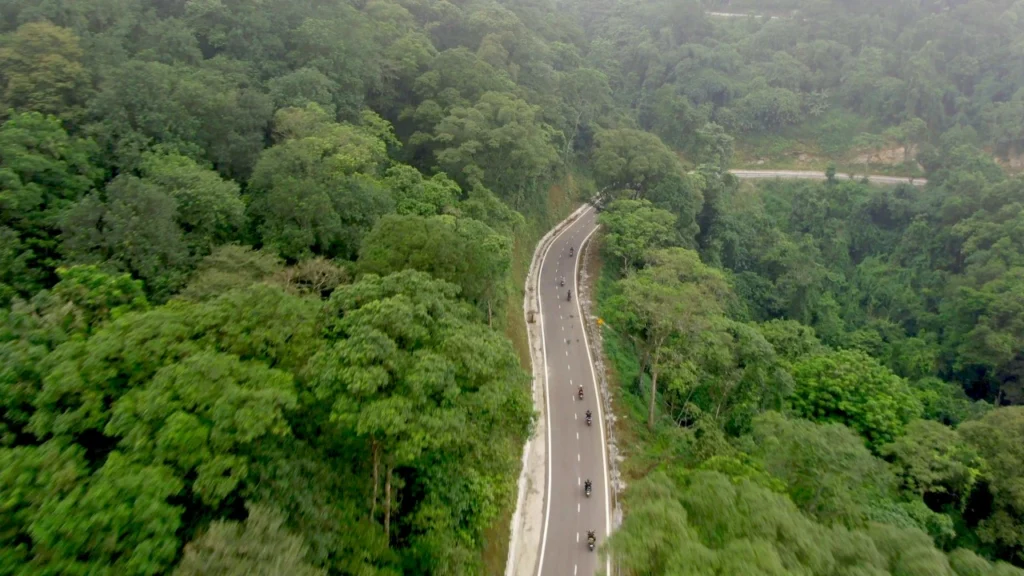
The road is good enough that even smaller bikes like the Wave 110 or Suzuki GD110 manage the climb, just more slowly. The XR150L or CB150X give the most comfortable ride on the bends.
The Summit Road and Viewpoint
The road through the park climbs from the entrance gate to around 1,100m, where there is a small area with a shop, a rest area and the start of the walking trails to the upper temples and summits. The drive itself is worth the entry fee alone — dense forest on both sides, cool air even in summer, and occasional views over the valley below as you climb.
From the top of the road, the views back over the Red River valley and the flatlands towards Hanoi on a clear day are excellent. The park sits in a cloud zone, however, which means visibility can drop significantly by mid-morning, especially during the rainy season between June and September. Starting early is worthwhile if clear views are the priority.
At 1,100m there is also a small stall selling noodles and drinks — a useful stop after the climb.
Uncle Ho Temple
From the 1,100m rest area, a path leads up a further series of stone steps to the Thuong Temple complex on the summit of Tan Vien mountain. The complex includes four connected temple areas — Ha Temple, Trung Temple, Thuong Temple, and the Uncle Ho Temple — reached by climbing over 500 steps through the forest.
The Uncle Ho Temple was built in the 1970s and sits at around 1,100 – 1,200m. It is a significant pilgrimage site for Vietnamese visitors and worth the short climb for the combination of the temple itself and the panoramic views from the summit. The forest around the steps is dense and quiet, with very different vegetation from the lowlands.
Allow about 45 minutes to an hour for the round trip from the road. The steps are manageable but can be slippery when wet.
French Ruins
At around 800m on the upper slopes, the remains of a French colonial hill station are scattered through the trees. The French built a small resort here during the colonial period and the stone ruins of buildings and walls are still visible, partially reclaimed by the forest.
This is one of the more atmospheric stops in the park — the combination of the jungle setting, cool mountain air and the old stonework has a particular character. The ruins are accessible from the road on the way up to the summit area, and easy to visit without an extended walk.
Natural Swimming Pools
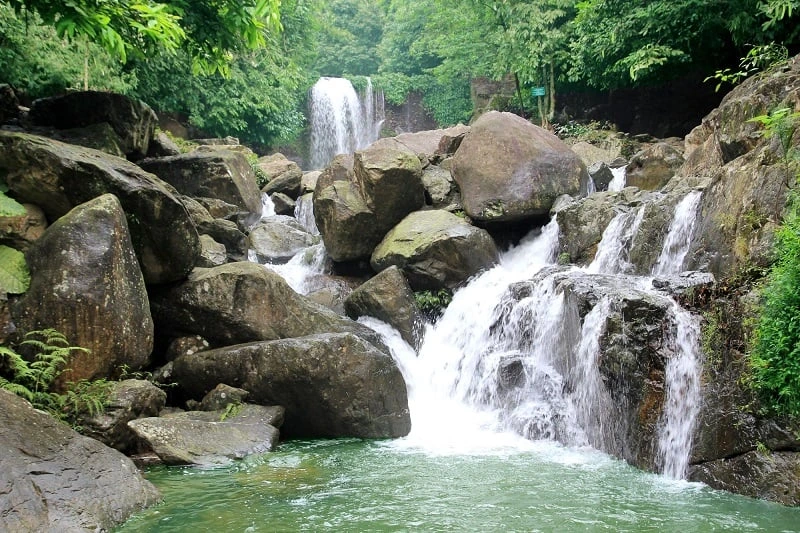
Within the park’s Thien Son Suoi Nga area, the Cong Troi waterfall on the upper slopes feeds a natural pool that is popular for swimming, particularly from April through October when the water is warmer and the summer rains have filled the falls. The pool sits in a forest setting and is one of the more refreshing stops in the park during the hotter months.
The water running off the mountain is clean and cool — noticeably colder than the air temperature at the base, making it particularly appealing after a morning of riding.
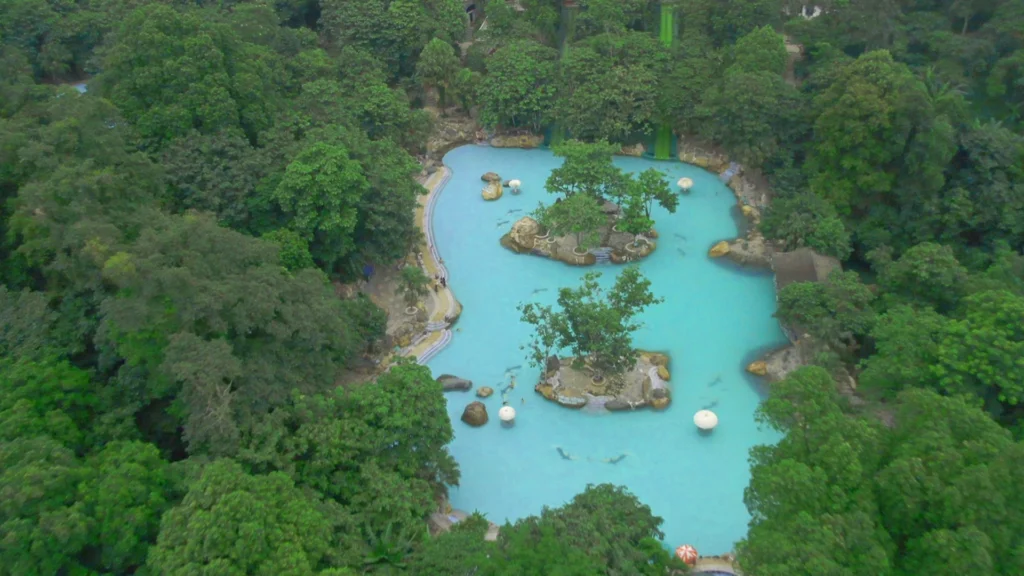
Thien Son Suoi Nga
Located about 5km to the left of the main park entrance gate, Thien Son Suoi Nga is a separate eco-tourism area that is worth including in the day. The site sits on the eastern side of the mountain range and has forests, streams, lakes and waterfalls across three connected zones — Ha Son at the foot of the mountain, Trung Son in the middle and Ngoa Son higher up.
The waterfalls here are the main attraction for swimming. The natural pools beneath the falls are clearest and most accessible during the summer and autumn months. In winter and early spring the water is significantly colder and the falls are less impressive.
Camping is popular in the Ha Son area, where there are also stilt houses and a restaurant serving local dishes.
Ao Vua and Khoang Xanh
On the foot of Tan Vien mountain, Ao Vua is a larger resort and recreation complex that takes its name from a legendary pond said to hold water year-round. The area has been developed into a tourist zone with boating, swimming, waterpark activities and accommodation. It is particularly busy with Vietnamese families at weekends.
Nearby Khoang Xanh (also known as Suoi Tien or Green Fairy) is another eco-tourism area with mineral water pools, waterfalls and camping. It holds a record for the largest mineral water swimming pool in Vietnam.
Both of these are more developed and family-oriented than the national park itself, but worth knowing about if you are staying overnight or travelling with people who prefer a resort setting to wild camping.
Where to Stay
Ba Vi works as a day trip from Hanoi for most riders — the 60km ride, a morning in the park and the return journey fits comfortably within a day. An early start gives you the clearest views from the summit before the cloud builds in.
If you prefer an overnight stay, both Ao Vua and Thien Son Suoi Nga have accommodation options ranging from basic guesthouses to resort-style rooms, most at reasonable prices. The Melia Ba Vi retreat is the most upmarket option in the area if comfort is the priority. Staying overnight allows you to explore the park more thoroughly, including hiking to the upper temples without rushing, and to ride back to Hanoi or continue west towards Mai Chau the following morning.
The park and surrounding area are quieter on weekdays. At weekends, particularly during warm weather, the resort areas around Ao Vua and Thien Son become busy with visitors from Hanoi.
Summary
Ba Vi National Park is the closest proper mountain escape from Hanoi by motorbike. At 60km, it is an easy day trip but has enough to fill a full day if you take the upper temple walk, stop at the French ruins, and include Thien Son Suoi Nga on the way back. The ride itself — particularly on the quieter river road west from Hanoi — is a good reason to go even without the park as the destination.
It also makes a natural starting point for a longer loop to the west. Riders heading to Mai Chau, Pu Luong or Moc Chau can combine Ba Vi as a morning stop before continuing south-west on the second half of the day.
If you are looking to rent a motorbike in Hanoi for a Ba Vi day trip or a longer route through the north, Style Motorbikes has a range of bikes suited to the mountain road — all manual or semi-automatic, which handles the climb better than an automatic.
Related Routes
Reviews
Share your experience and help other ridersNo reviews yet. Be the first to review!
Leave a Comment & Review